

MONTESSORIFÖRSKOLAN SMULTRONSTÄLLET is a small independent preschool with 38 children.
MONTESSORIFÖRSKOLAN SMULTRONSTÄLLET is a small independent preschool with 38 children. The share of staff with pedagogical higher education (39.9%) is below the national average of 44.3%.
- Children
- 38High reliability
- Municipality: 1,746
- Share with pedagogical higher education
- 39.9%High reliability
- Municipality: 58.5% · Sweden: 44.3%
- Children per staff member
- 4.4High reliability
- Municipality: 4.8 · Sweden: 5.1
The most important facts in 3 points
- Preschool in Lidköping with 38 enrolled children.
- Preschools are not covered by our inspection sync; check the Inspectorate or municipality if needed.
- Applying? Go to the school's application link on this page.
Skolkoll interpretation
MONTESSORIFÖRSKOLAN SMULTRONSTÄLLET is compared here with 29 other schools with the same school form in Lidköping municipality; it has 38 children versus the municipal average of 62.
Share with pedagogical higher education: 39.9%, 18.6 percentage points below the municipal average and 4.4 percentage points below the national average.
Children per staff member is 4.4, 0.4 lower than the municipal average.
Apply for a place? Use Lidköping e-service for preschool application (opens in a new window).
School programmes
- Montessori
Things to look into
No clear flag.
No clear attention flags from key-figure deviations or the School Inspectorate's public register. Detailed inspection history is shown in the "Safety & Inspection" card below.
Aerial view of the school
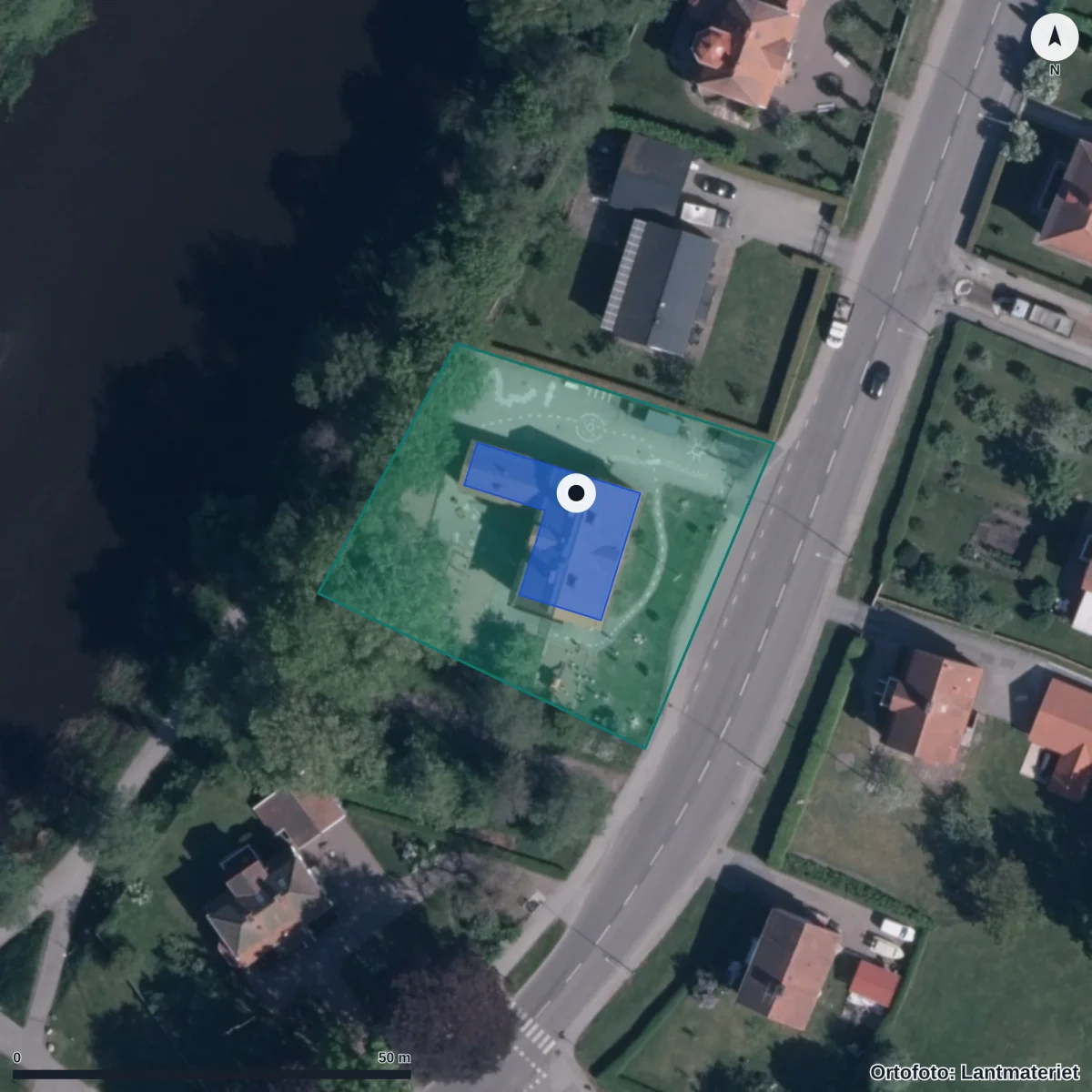
The school's property boundary and buildings from the Swedish Land Survey's property register. Updated 2026. Source: Lantmäteriet · CC BY 4.0
Entrances:1 Lidköping, Hamngatan 10, Lidköping
School performance
Staff
39.9%Share with pedagogical higher educationMunicipality: 58.5% · Sweden: 44.3%
Staff
39.9%
Share with pedagogical higher education
School environment
Safety & Inspection
No recorded deficienciesRecently inspected
Safety & Inspection
No recorded deficiencies
Recently inspected
No registered inspection decisions with deficiencies.
- Recorded decisions with deficiencies Reliability: High reliability.
- 0
High reliability — Inspection register and Skolenkäten survey.
Source: Schools Inspectorate + Skolverket · Last updated: 5 Oct 2026
Who runs the school
Operator
MONTESSORIFÖRSKOLAN/LIDKÖPING EKONOMISK FÖRENINGIndependent operator66 other schools in the municipality.
Operator
MONTESSORIFÖRSKOLAN/LIDKÖPING EKONOMISK FÖRENING
Independent operator
MONTESSORIFÖRSKOLAN/LIDKÖPING EKONOMISK FÖRENING operates this school independently.
- Operator Reliability: High reliability.
- MONTESSORIFÖRSKOLAN/LIDKÖPING EKONOMISK FÖRENING
- Operating form Reliability: High reliability.
- Independent
- Other schools in municipality Reliability: High reliability.
- 66
High reliability — Current data from Skolverket and Bolagsverket.
Source: Skolverket · Last updated: 5 Oct 2026
Next step: Apply for a place
Apply through Lidköping e-service for preschool application.
Contact and address
- Visiting address
- HAMNGATAN 10, 53135 LIDKÖPING
- Postal address
- c/o Montessoriförskolan Smultronstället, Hamngatan 10, 53135 LIDKÖPING
- School unit code
forsk-984797
Source: Skolverket School Unit Register · Pipeline-fetched on 2026-10-05.
Everyday travelAreas that reach the school within 15 minutes.
Reachability from the school
15 min on foot
15 min by bike
School
Daily-life profile
Everyday life at the school
Everyday facts are shown with a source where available. Fields not yet collected are listed together and do not affect score or ranking.
Not collected yet: School day times, After-school care, Profile or focus, Language choices, Food and dining, Facilities and outdoor environment, Homework and study support. Suggest an addition →
Nearest and similar schools
- BJÖRKHAGA FÖRSKOLASame municipality· 50 children
- BROHOLMS FÖRSKOLASame municipality· 38 children
- DJURGÅRDENS FÖRSKOLASame municipality· 47 children

About Lidköping municipality
School-form averages across the municipality, with links to deep-dive sub-pages.
- Schools
- 67
- Avg. merit (yr 9)
- 219.6−8.0
- Certified teachers
- 80%+6 pp
- Pupils per teacher
- 11.4−0.5
Source: Skolverket (aggregated school statistics).
★ Watch Montessoriförskolan Smultronstället
Get email when new statistics are published, merit value changes significantly or the School Inspectorate makes a new decision.
Want to dig deeper?
The Data view shows complete history, sources, methodology and CSV export.
In-depth metrics
Staff stability
Improving
Source: Kolada (municipality-aggregated certified teacher trend).
Preschool statistics
Key figures for MONTESSORIFÖRSKOLAN SMULTRONSTÄLLET. Compared to municipal and national averages.
Pedagogical profile:
- Montessori
Staff educational background (2025)
Skolverket's mutually exclusive categories for staff in the preschool unit. The figures come from Skolverket's annual survey; staff hired after the survey appear first in the next survey.
| Category | This preschool | Municipality | National |
|---|---|---|---|
| Pedagogical higher educationpreschool teachers and others with a Swedish higher-education degree | 40% | 58.5% | 44.3% |
| Upper-secondary qualification for work with childrenchildcare assistant training or equivalent | 21% | 17.5% | 15.4% |
| Some pedagogical trainingfor example parts of a pedagogical education | 9% | – | – |
| Other educationother education, including foreign qualifications not validated in Sweden | 30% | – | – |
| Other educational background (combined)comparison row for the two categories that municipal and national statistics publish together | 39% | 24.0% | 40.2% |
Of which preschool-teacher degree: 28%
Preschool-teacher licence (share of full-time posts): 28% · Municipality 60.1% · National 44.7%
A preschool-teacher licence is Skolverket's proof that someone is a qualified preschool teacher; as a rule, only licensed preschool teachers may be responsible for teaching. Pedagogical higher education means a university degree with a teaching focus, with or without a licence. The measures are counted separately, so the share with a licence can be higher than the share with pedagogical higher education.
Children enrolled (2025)
| Share | This preschool | National |
|---|---|---|
| Share of girls | 61% (exact value 60.5%) | 48.6% |
| Children with a foreign background (born abroad, or both parents born abroad) Including children who were not in the population register on 30 September of that year. | Not reported (Skolverket)Skolverket does not publish this value, and Skolkoll does not estimate it.Not reported (Skolverket) — Skolverket does not publish this value, and Skolkoll does not estimate it. | 24.2% |
| Children with at least one parent with post-secondary education | 79% (exact value 78.9%) | 68.1% |
The figures describe which children are enrolled, not the preschool's quality, and affect no rankings on Skolkoll. The shares vary a lot between municipalities and neighbourhoods; the national figure is a reference, not a norm. At a small preschool a single child can move a share by several percentage points. Skolverket does not publish a value that rests on few children, so small preschools often lack it.
Municipal preschool data for Lidköping (2025) (5 metrics)
National averages for group sizes and children per FTE are calculated from all 290 municipalities; the other national figures cover the whole country. Municipal data is aggregated and applies to all preschools in Lidköping. Source: Skolverket preschool statistics. Updated annually.
Explore further
More context about Montessoriförskolan Smultronstället, its municipality, operator and similar schools.
Preschools in LidköpingSee all preschools in the municipality with key metrics.Schools in LidköpingOpen the municipality page with all schools, rankings, and local aggregates.Montessoriförskolan/lidköping Ekonomisk FöreningSee all schools, municipalities, and core metrics for the same provider.Västra Götalands länCompare municipalities and school patterns across the whole county.School size by school typeSee how school forms and unit sizes are distributed nationally.School type distributionCompare how school forms are distributed across municipalities and operators.Compare schoolsBuild a side-by-side comparison with the schools you care about.
Data coverage
What we do not know about Montessoriförskolan Smultronstället
Open school data is not complete. Use this as a checklist for what to verify with the school, provider or municipality.
- MissingResults and score inputsSkolkoll score is not shown for this school type or lacks enough underlying data.
- MissingEligibility and goal attainmentGrades, eligibility and goal-attainment data may be missing, suppressed or available only for some grades and school types.
- UncertainResources, teachers and staffTeacher and resource metrics do not always show subject mix, vacancies, student-health workflows or everyday staffing.
- MissingSupport resources and student healthWe do not yet have a verified national data source for special education, student health, adaptations, language support or contact routes per school.
- MissingSafety and study environmentWe lack current or displayable survey data about safety and study environment for this school.
- UncertainAdmissions, placement and important datesMunicipal placement rules, queues and important dates require a local source and should be checked with the municipality or school.
- MissingVisits, facilities and everyday environmentWe lack sourced open-house information for this school. Facilities, accessibility and everyday environment are often not open comparable data.
See Data view for full sources and fetch dates per source.
